Showing posts with label public relations. Show all posts

Friday, April 8, 2016

Social Media Hits & Misses - Talk Show Edition

As a digital marketer I live in a 24/7, constantly on the go, tech savy world and like many millennials I value having social media at my fingertips to share important moments in my everyday life as I interact with brands.  While in NYC for a week visiting friends I had the opportunity to compare and contrast two talk show empires and the value they place on their social voice.

Live with Kelly & Michael


Challenges:
  • A small studio in the middle of the Upper West Side means long wait times outside to get in 
  • A long rectangular shaped studio means many audience views are blocked out by stage crews and cameras 
  • Live show means a long wait for a very short taping for audience members.  

WINNER WINNER:
  •  Policy for audience members: Take as many photos as you want!
  • Social media channels addressed on the show and reminded to audience to reinforce brand
  • Every break Kelly and Michael ran over to audience members to take selfies (which you know were posted everywhere online)
  • The crew allowed any audience member that wanted to take a photo with the show logo backdrop on way out to do so, no rush

This show hit a home run for me as an audience member who didn't get a great seat. (This photo was taken by a friend with a better seat, thanks Craig!) Instead of feeling cheated the experience and the atmosphere was so conducive to social media, supporting and encouraging its audience members to share their experiences, that I left wanting to come back.  Next time, I found myself thinking, I'll stand in line at the crack of dawn if it means getting a great seat and a photo with the celebrity hosts.


The Dr. Oz Show


Opportunities:
  • Spacious ABC Studios location in midtown Manhattan where audience members spend very little time waiting outside
  • Large open studio with clear views for every audience member, not a bad seat in-house!
  • Taped segments mean lots of downtime in between segments to post about experiences and take photos if given the opportunity

GAME OVER:
  • Policy for audience members: No cameras in studio and phones off entirely
  • Social media channels never mentioned and show hired a comedian to try to entertain audience members between segments when they could have been posting online
  • Dr. Oz takes photos with audience (taken by show) and shakes hands, but shows misses opportunities for audience brand ambassadors to share their positive experiences live
  • Audience rushed out the door at end of taping by crew, not allowed to stop and even take pictures with show logos

This show struck out for me as an audience member who received a great seat in front as well as free tickets to a movie premiere the next day.  Instead of feeling delighted by the experience and the atmosphere I felt confined, unable to share the great excitement I was experiencing shaking Dr. Oz's hand and even doing a taste test on camera with my family and friends in a timely manner.  Furthermore the show often misses out on great story lines including this photo I sneakily took (hence the graininess) in which Dr. Oz signed a magazine for a 94 year old fan who was as giddy as a schoolgirl to meet him. (I shared it on Instagram anyway, sue me).


Tuesday, October 14, 2014

Leveling the Playing Field: How Small Market Teams Thrive in the Digital Space w/ the Milwaukee Brewers

Postseason baseball brings an air of unbridled enthusiasm to the game. Crowd attendance grows, sports bars fill with excited fans and the hunt for October evokes a passion for the game that reverberates through the nation. This postseason is not unlike any other, plentiful with extra inning games, rookies making career defining plays, and pitching duels that go long into the night. This particular postseason however, may end with a Cinderella-esque storyline as the Kansas City Royals leave their small club mark against mighty big leaguers like the Los Angeles Angels.  The Royals rise to fame this season has called forth the age old question as to whether small market teams can truly thrive against big league clubs where high dollars for top talent and lavish facilities know no limits.  While for many a truly level playing field among the David and Goliaths may never exist in baseball operations, the sports marketing world with the digital landscape at its fingertips, finds itself with unprecedented opportunities for teams to reach more people, elicit more passion for their brands, and unite fans everywhere.


A desire to learn more about how small market teams are tackling the digital space and what unique challenges they face brought me to Milwaukee as the season wound to a close.  I sat down with Caitlin Moyer, the Brewers' Director of New Media to talk about the roller coaster of a season that had the team, reeling in everything from steroid controversy and a lovable stray dog to a lead of the division for most of the season and a hard fall from grace finishing the team outside the playoffs.  I left Miller Park's packed crowd with a sense for three areas small market teams like the Brewers excel at, when marketing across the digital divide.

1.  Flexibility and Efficient Timing - When the Brewers began their season many expected Ryan Braun, the team's fan favorite player, and his positive test for steroids to be a negative black cloud of controversy tainting much of the season.  That was until a loveable stray dog showed up at the Brewers spring training home and Moyer and her team got to work showcasing the cuteness that ensued.  What started out as a sweet online story about a dog that the team took under their adoptive wing grew into a staple for the Brewers' ball club with social sharing, engagement, and all around positivity among fans young and old generating requests for more pictures, more updates, and a store filled with Hank the dog merchandise.  Moyer made it clear the dog's emotional tale was not any sort of well devised plan to pull attention away from Braun, but rather the team's superior management style that allowed Moyer to jump on any content that might be of interest to the fans and run with it.  Hank the dog soon filled the daily newsfeeds of Brewers fans generating inclusion in sausage runs, his very own bobble head night, and next season a brand new mascot that will represent the lovable mutt.  Will we continue to see more content about Hank next year?  "If the fans dictate it, absolutely," Moyer responded.

2. Managing Expectations & Human Emotion - "Winning solves everything."  It's a common expression used in sports marketing when describing the challenges of selling tickets and filling more seats.  Yet for small market clubs who often don't find themselves on the winning side of a season, a roller coaster ride that sees them leading their division only to fall from grace before the postseason can create far more difficulties for the digital marketer.  Moyer expressed this season as having being especially challenging as the Brewers' digital space became a stomping ground of human emotion with fans exhibiting exceptionally strong opinions on their expectation of the team and their unfiltered disappointment.  So how do small clubs handle the rise and defeat?  By preparing for the tidal wave.  Digital mavens like Moyer prepare for the worst while planning for the best, taking on a psychological role that lets fans blow off steam online by putting out less content and tailoring what content there is to human interest and community pieces over team cheer-leading, bringing a welcome distraction from the game itself while still positioning the brand in the best light.  "I have to be careful what I post at those times, that content can become a magnet for negative responses regardless of what I'm posting. It's hard, but there are other great things we're doing with the community and kids worth telling," Moyer explained as we watched kids from the community have the chance to line up beside players in the field pre-game, riddled with excitement.


3. Content is King - Step right up and see how fast you can throw a pitch. Try your luck and see how fast you can run the bases. Take a slide down Bernie's dugout slide.  Feeling adventurous?  Try the climbing wall, get to the top, ring the bell, and take a look at the view overlooking the outfield.  Stroll around Miller Park and the host of activities that lay ahead is likely to make anyone's inner child squeal with delight. As a frequent traveler who has enjoyed a game in 19 of the 30 parks, I expressed my favorable impression at the wealth of activities available to Moyer and asked if the park's active (and largely baseball related) in-park entertainment was indicative of a larger brand appeal that crossed into the digital space.  Moyer explained that the club understands the importance of the fan experience and the types of content that result in more digital captures, more social sharing, and more family trips to the park.  Each season brings with it more and different sponsorship opportunities, but the ball club positions the sport of baseball front and center, as well as activities that fans will be excited to take part in and share visual proof of to friends and family.  This approach to in-game entertainment and sponsorships results not only in fans who are more connected to the brand and a complete day at the ballpark, but also in turn keeps the tickets selling.  As we parted ways Moyer exclaimed, "be sure and catch the sausage race it's an old tradition, and take a look around: climb a wall, throw a pitch, there's always something fun to do here, there's truly nothing else like it."


And in true digital marketing spirit I did just that.....and then shared the photos with all of my friends.

Thursday, April 17, 2014

Major League Baseball’s Changing Identity


Tuesday marked 67 years since Jackie Robinson broke baseball’s color barrier, and for the first time in the 50 years since commissioner Bud Selig retired Robinson’s number, there are no players in the major leagues wearing the No. 42 except on that day.  While athletes on the field donned the iconic number on their jerseys from Los Angeles to Miami, inside New York City’s Manhattan Center, thousands of fans, employees, and future business partners of Major League Baseball were on hand to celebrate at MLB’s 3rd annual Diversity Summit.  

Major League Baseball has had a troubling past, one that hasn’t taken kindly to accepting and embracing the changing of American demographics, despite the label of America’s favorite pastime.  Racial diversity has long been a struggle, with team rosters severely lacking minority players taking to the field and entering many off the field discussions. However, few are privy to what goes on behind closed doors in the management of baseball and the diversity, or lack of, among employees that run the front offices.  Rev. Jesse Jackson traveled to baseball's 1992 winter meetings to criticize its lack of minorities in management, and push for change.  Yesterday he was on hand to commend the commissioner for strides the sport has taken in minority opportunities over the past twenty years.  In 1998, Selig created the Diverse Business Partners program and by 1999, started requiring clubs to consider at least one minority for each manager and major executive opening.  Today, just three years since its conception, the MLB Diversity Summit welcomes in women and ethnic minority groups that have for so long faced barriers to a career in, or working alongside MLB.  Participants are able to gain first hand knowledge of baseball operations, speak face to face with human resource and procurement representatives from all 30 teams, and have a voice in the business of the sport. 

As a female with a passion for sports, who has worked for major sports networks on baseball production and often found myself the only woman in the mix, MLB’s commitment to providing a forum for under represented groups to find career growth and meet top-level mentors is both empowering and captivating.  In just 48 hours I was able to speak with 15 ball clubs about the growth of digital marketing and social media, converse on the need for more women who understand the game working in the front offices, and connect with minority-owned companies that offer an assortment of goods and services to the sport I had never even considered.

Major League Baseball has evaluated its weaknesses in hiring, it’s deficiencies in employment, it’s lack of diverse minds, skillsets, and backgrounds in management and it has made a commitment to its fans that the diversity of those that attend its games will be reflected in those that put on its games.  While I at times questioned the large number of young, white men who chose to attend a diversity summit looking for work, and yearned to see still more women in attendance than appeared at the event, I know I was witnessing a transformation.  This yearly summit is not only an honorable dedication to a man who, despite the harsh criticism and seemingly insurmountable hurdles, brought a necessary change to the game, but also a chance for the future of baseball to host equal opportunities for all. 

"Baseball must continue to be more than just a game on the field," Selig said at the summit. "The game's remarkable ability to serve as a common bond should be used to create opportunities for all people regardless of race, religion, sexual orientation or gender."  I hope the next commissioner continues moving forward along the path Selig has paved and recognizes the importance of a MLB brand that is truly indicative of the melting pot of America.   


A commitment must be made to every fan that baseball will never forget the man whose legacy changed the face of not only the sport, but also the country, and continue its progress to equip every person with the same opportunity to live out his or her baseball dream.

Wednesday, March 5, 2014

Changing Dynamics: How the Charlotte Bobcats are Taking on A New Identity - Special Guest Charlotte Bobcats Exec Jerome Hubbard


http://bit.ly/1cD8Ac6
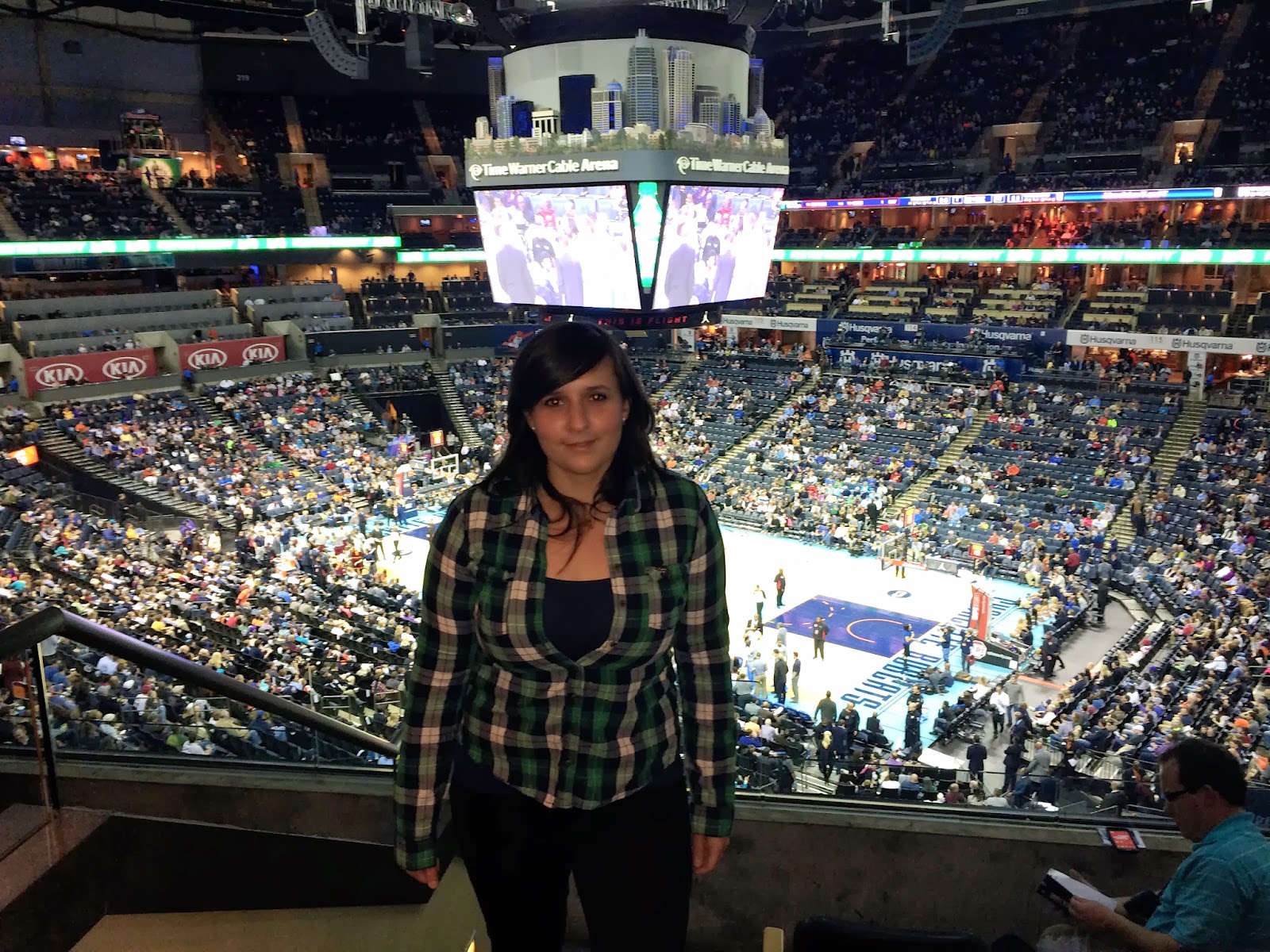
To say that the journey of the Charlotte Bobcats over the past few years has been rough, would be putting it lightly.  Despite sizable notoriety at the helm of the organization with owner Michael Jordan hard at work, the Bobcats have faced a losing record season after season.  But there’s a new franchise in the making, a team finding a competitive edge with the acquisition of Al Jefferson alongside a young core of talented players, and a new look that will see the Bobcats donning an old familiar name when they return as the Charlotte Hornets next year.  An Emory University study highlighted Charlotte’s basketball fans as some of the most social media savvy, holding steady at 4th in the league for most engaged fans only after the NBA’s heaviest hitters (Lakers, Heat, Celtics). Recently news broke about the team’s partnership with 10 Foot Wave, incorporating the company’s FanConnect platform within Time Warner Cable Arena. The technology combines sponsor messaging with live game content, real-time stats, NBA scores and social media delivered to screens throughout the venue.  I sat down with Jerome Hubbard, Communications Coordinator for the Charlotte Bobcats, this week to discuss the new platforms, the exciting re-branding, and the unwavering fan support as the team begins its journey to capturing a new generation of fans.

On the Challenges of the Digital Information Age…"When I first got here our record was 7-59. There’s not much good that’s going to come out of 7-59, it is what it is.  If you’re the Miami Heat and you’re winning games and you’re blowing people out of the water, and you have the best player in the game you don’t really have to worry about information because at the end of the day it’s pretty much everyday the Miami Heat win and why they win.  When you’re dealing with losing, and you’re dealing with people who are tired of losing, who work their tail off and are not seeing the results, then they say that we’re not showing effort, we’re not showing energy, we’re not showing the patience and the due diligence and the hard work, and that’s not right.  So that’s more of a situation that you have to really monitor and that goes to the personal relationships. In the past and even now the personal relationships that you gain with the reporters and the people who are covering the team, whether it’s on the TV side, the radio side, or the print side, those relationships allow you to give them information knowing that they’ll use it fairly and that ultimately they’ll use it in the right way.  If you don’t have those personal skills or that personal relationship then it’s really hard and that to me really makes or breaks a person in this field."


instagram.com/brooklyn_hun
On Resurrecting & Rebranding the Hornets…"There’s certain things about the Hornets that Charlotte loves. Charlotte loves the colors, Charlotte loves the name, Charlotte even loves the mascot.  But you also have to keep in mind at the end of the day that it HAS to be different. We can’t go back to everything that was the Hornets, but we do want to continue to grow and galvanize not only our Bobcats fans, but those Hornets historians who love the Hornets, love the tradition, love everything about the experience when they first came.  You have all of these different moving parts, the official name change, the logo, the mascot, the cheerleaders, the unveiling of our uniforms, all of those different things are strategic and I think we’ve made a concentrated effort to continue to make sure that we maximize every opportunity with each phase that we’re going through.  Everything that we do we want to be an experience.  Unveiling our logo was an event where we had our owner Michael Jordan halftime, really bringing out the logo with former Hornets players with a bunch of fans there screaming, and it was well received, in the same way that it was well received when we applied and were approved for the name change. Hats off to not only the organization, but also the fans that continue to support us.  There’s so much going on and we want to maximize it, whether it’s thru digital, thru a fan experience, or whether it’s just the continued process from start to finish. "

instagram.com/brooklyn_hun
On New Technology in the Arena…"If you look at the NFL, their sales in relation to attendance has decreased over the past couple years and that’s because a lot of people feel as though it’s much more convenient to be in front of the TV where I can watch NFL RedZone and have five different games on at one time and I can monitor not only the one I want to watch, but also what’s going on here, what’s going on there, and how this or that game affects my fantasy league or team.  That truly appeals to fans not only in the NFL, but also in MLB, and also the NBA, so if we can continue to add various elements to our inner arena experience, that may be something that somebody else doesn’t have.  And that may get that one or two or 100 or 200 more individuals attending our games. So you want to continue reinventing the wheel and keep adding elements and hopefully you get to a point where you have the best inner arena experience in the NBA, and even more so than that, just sports in general.  Adding something like the FanConnect or the Technocom business center in our arena, or adding luxury suites and a luxury experience for our suite owners, all of these different things come into play and that’s just added value to our inner arena experience for those that decide to come to our games."
instagram.com/brooklyn_hun
On Developing the Fan Experience…The fans are fans, if a team is losing or winning they’re still going to come out and support. Like the Knicks, they have a loyal fan base, they sell out every game no matter what. Win lose or draw they’re selling out every game and that is a credit to the fans.  We want to make the fan experience great in Charlotte and we’ve done so many things to continue to make sure that the organization and the fan experience at our basketball games and anytime they come to our arena is up to par.  Whether it’s the interaction with the players that they possibly can have pregame, the concession stand, the dance team, the mascot, whether it’s us going out into the community and having giveaways, or even having trivia contests through social media, there’s so many different things that we have done in order to continue to keep our fans engaged, to continue to keep the environment of the games great.  So even if we win or lose, we want people to be able to say, I enjoyed myself at the basketball game, it really was a great experience.  That one-on-one experience that you can get coming to a Bobcats game is something that you really want to hang your hat on.

Friday, February 28, 2014

This Week in the Digital Sports Jungle


High scores, bad calls, and the latest advances, I take you through this week's highlights.  Here's what everyone is talking about online in the sports world:

Twitter
  • Dale Earnhardt Jr. made a promise before the Daytona 500 that he would join Twitter if he won the race. He not only won, but paid tribute to his late racing legend father with a tweeted photo.  http://bit.ly/1kgmx7B
  • PGA Golfer Steve Elkington tweets gay slur about first openly gay NFL athlete Michael Sam, and after receiving extensive criticism tries to clarify remarks, but it’s too little too late.  http://lat.ms/1hvtqi3 

Marketing
  • Jason Collins, the first openly gay NBA player signs 10-day contract to play for Brooklyn Nets and wears No. 98 to honor fallen gay student Michael Shepherd.  NBA.com launches Collins jerseys for sale online amidst unprecedented number of requests.  http://nyti.ms/1o3s3rs
  • Brazil’s local government sends out a formal complaint to Adidas to stop using sexual undertones and sex appeal to sell World Cup products promoting the event in the host country. Adidas removes the limited edition t-shirts for sale after complaint is filed. http://yhoo.it/1dIMIfN
T-shirts withdrawn by Adidas for the Brazil World Cup Photograph: Adidas

New Technology
  • Starting March 30th, Major League Baseball will join the ranks of other professional sports with the introduction of instant replay to the game and put an end to missed calls.  The system will cover most plays and managers are allowed one challenge a game. http://usat.ly/1fYCx7j
http://bit.ly/1fOkaFO
  • Major League Baseball fans with the MLB’s free At the Ballpark app will have the opportunity to do more from their seats including ordering a hot dog or buying a souvenir.  More than 20 Major League parks will utilize Apple’s new groundbreaking iBeacon technology this season. http://bit.ly/1eJLrF1

Social Sharing
  • At the age of 54, Brenda Gold has set her sights on making the Ben-Gals squad, the official cheerleading team for the Cincinnati Bengals.  She even received a make-over for her future career pursuits while on LIVE with Kelly and Michael.   http://usat.ly/NbR88o

  • The Milwaukee Brewers adopted a stray dog at spring training, named him Hank, and his cuteness has gone viral. The pup took center stage as the newest mascot in his sausage run debut. http://deadsp.in/1hpOGph
(Photo credit: Cheryl Evans/The Arizona Republic)

Thursday, February 27, 2014

College Athletes in the Digital Sports Age with Duke University Baseball Pitcher Remy Janco


Sports controversy has brewed this off-season around the Phillies decision to turn in two college baseball players for using an agent during negotiations with the team (first reported on Twitter by Baseball America’s Aaron Fitt).  The sought after advice likely led the players to return to college rather than signing with the team, resulting in a frustrated Phillies’s organization.  According to CBS Sports using an agent is common practice in dealing with MLB teams, however the Phillies’s report resulted in an indefinite NCAA suspension for Oregon State pitcher Ben Wetzler, that could be extremely damaging to his future.  With so much discussion surrounding policy vs. player development I was curious to know whether we are doing enough to protect and help our young athletes.  The digital landscape has paved the way to unlimited resources for an educated athlete to learn every aspect of his sport and seek out advice, but are young athletes prepared enough in their daily lives?  Can they effectively manage their future careers, wading thru the waters of personal branding, online reputation, skills improvement, and career decision-making, all while still maturing into adults?  Or are we setting them up for failure by relying on the Internet as their sole source of advice?  To help provide some insight into this I interviewed Duke University baseball pitcher Remy Janco.


Q.) With so many tools, videos, advice, and research available online, do you feel that high school college players are prepared enough to make serious life decisions like college vs. pros unaccompanied, or do they still rely heavily on the expertise of others in the business?
A.) "I think that as a college baseball player in today's age I have many more opportunities than those in my shoes in the past.  During my recruiting process, I used video to spread my name and create another avenue to reach college coaches other than just seeing them at showcases and tournaments. Video was and still is a large part of my development as a player. One particular video analysis tool I use is the RightViewPro application that is used by many college baseball programs to break down a player’s mechanics and work on making positive changes.  With these new tools, videos, and advice I am not only able to develop more as a player, but I was also able to make a very educated decision on where it was I wanted to go to college. From my perspective, I think that all the new tools are extremely helpful in the process, but it is still very valuable to have an agent or an individual by your side who has dealt with the process before and has your best interests in mind.  This is something a tool simply cannot provide no matter how effective it is."

Q.) How do you balance sharing your personal college life on social media sites with protecting your image as a collegiate ball player?  Does the University provide you with any education about online reputation management?
A.) "As a college athlete I am very active on social media. I have a Twitter and a Facebook account where I communicate my everyday life to my friends, family, and other followers. I really enjoy being active on social media, but it also is very important that I am smart about what I post. The athletic department at my school along with the baseball program follow me on Twitter to make sure that I am being responsible online, as well as doing a good job in representing myself and the university. The athletic department also has a very useful program that freshman athletes must take that educates them on social media and how to use it to promote their image responsibly. It’s aimed at making the transition into college easier and encourages us all to learn what it means to be a student athlete and a positive representative of our school."

Q.) Just for fun there’s a White House petition being led this week by Ozzie Smith to make baseball's opening day a national holiday.  Does he have your support?
A.) "I think that the petition led by Ozzie Smith is extremely interesting! While I would love to see opening day recognized as a national holiday, I think it will be a very difficult task. As America's national pastime, I think Ozzie has an argument for his petition, a national holiday is a very big deal and to have that passed would open the door for a lot of other sports to make the same argument. I'm very curious to see where that goes, but I’m definitely behind it!"

Friday, February 21, 2014

Online Reputation in the Digital Sports Age with CBSSports.com Columnist Gregg Doyel


            Earlier this week I brought you a glimpse into the timeline of events that lead to NFL player Richie Incognito’s fall from grace including digital imprints in voicemails and texts, as well as excessive tweeting, that added fuel to the story and left a lasting public opinion of the player as the worst kind of bully.  My guest interviewee, national columnist Gregg Doyel, writes for CBSSports.com and shines a light on the struggles with reputation in the information age.   This week he wrote a piece on Incognito and his battle with seeing the worse of himself in the public spotlight and whether he could learn something from all his mistakes (http://cbsprt.co/1c7PudP).  I was curious to get Doyel’s take on this, especially regarding our own unique relationship.

Doyel on CNN 2009
Before this week I’d have been more likely to call Doyel an enemy than a friend.  In 2009, at the height of my tabloid explosion, CNN covered dangers in the workplace and whether the sports world plays by a different set of standards, with Doyel as their expert guest.  Instead of using his time on air to talk about workplace dynamics, Doyel spent most of it degrading my appearance and sounding off on the fact I was only news because I was so unattractive.  And just like much of my struggle in regaining control of my online reputation (lawsuits, press circuits, websites), the video of Doyel remains heavily YouTubed to my name.  This week Doyel made a conscious decision to right his wrong, using social media to reach out to me and apologize for his behavior and embarrassment at the man he once was.  I wanted to get inside his head both in his professional setting detailing Incognito's story and in his personal life looking back at his public mishaps.  I wondered what brings about this negative behavior, is there something to learn when we’re faced with the worst of ourselves, and is there a way to leave behind a positive image in this crazy digital jungle?

Source: http://bit.ly/1nsPIXw

Q.) What do you think propels those in the sports world to take a more abrasive, "bullying" tone in dealing with one another?
A.) "I think it's personal weakness. We all want to be perceived by our peers -- strangers, sadly -- as being cool or snarky or smart or whatever, and so we tee off when we can. Sometimes it translates to bullying, sometimes to cruelty or insensitivity. I suppose in some cases, sure, it's a person acting out based on how they've been treated, and now it's THEIR chance to treat someone badly. But in more cases, I'd bet it is just people showing how weak and pathetic they (we) are by wanting to be perceived as cool by a flock of strangers who don't care about us in the first place. Talk about pointless."
Q.) How do you think the digital age has changed how we view sports professionals?  Has it hurt more than helped?  Has it changed how you report?
A.) "Social media can show us the beauty in the world by allowing us to share and spread links about wonderful stories, but it also has made everything uglier because it has allowed us to see the real people we cover and watch, and also it has allowed us to show the real US who are covering and/or watching sports. Every person is flawed and imperfect, and social media doesn't just take off our makeup and toupee, it aims a magnifying glass on our blemishes. The irony is, we're the ones aiming the magnifying glass at ourselves by trumpeting just how flawed we are as people. "
Social media has, finally, made me become a nicer reporter/writer. I'm no longer chasing the snark crowd. If I have a snarky thought and the readers like it, great. But also, I know they're going to like prettier, more uplifting stories, and those are the ones I make it a point to pursue. If too much time passes since I've written one of those, I make it a point to write another one. Social media has helped me see the necessity of that. People crave good news. And I crave it myself.

Source: http://bit.ly/1hmPbic
Q.) Looking at the long term effects of the digital imprint of ourselves that's available 24/7, how do you think Incognito's story will play out?
A.) Incognito isn't smart enough or nice enough to win on social media, so he needs to get off Twitter. Some people don't have the tools to win people over, and unless he changes who he is, he doesn't have those tools. He's bound to screw himself up by saying the wrong thing; meaning, showing us exactly who he is. And who he is, up to now, is a dislikable jerk (at best). My advice to him would be to stop being mean and try to be nice. Easier said than done, and you have to have that wiring within to embrace kindness. Not sure he does.
Q.) Do you think there can be successes in sports with social media?  Is there a way to balance connecting with fans and showing a fun loving side, but not destroying one’s professional reputation?
A.) There are some athletes who I'm pretty sure aren't the nicest people ever, but because they're so good on social media, they win anyway. Brandon Phillips of the Reds is one. Chad Johnson (was) another. Some people are just so good at social media, even if they're not terribly good at winning people over on the field or in the clubhouse that it works for them. But those are the outliers, the exceptions. They do exist! But it's really hard to appear nicer on social media than you do away from it. Those two have done it, and kudos to them. They've shown me another side of them, and made me reconsider them as people because they are so charismatic and kind on social media.

Thursday, February 20, 2014

The Rise and Fall of an NFL Player


            The story of Richie Incognito has been a captivating one.  From the sudden and dramatic exit of teammate Jonathan Martin from the Miami Dolphins to four months worth of damaging voicemails, texts, and an independent report all pointing to Incognito as the instigator for the worst kind of workplace bullying, it’s filled the sports pages with a look into a locker room culture few are ever exposed to. It's also created an interesting case study into the damaging effects on reputation among sports figures in an age in which the news breaks quicker, social media allows for a digital imprint of bad behavior, and in which poor decision making can result in a nation-wide reprimand through online public attacks.

In today’s world you’re quickly judged in the realm of public opinion before you can often even respond to the story, and rectifying one’s online reputation can be daunting at best especially for those who were largely unknown before the damage was done.  Here’s a quick roundup of the events of the past four months to shed a light into the fall of Incognito’s reputation and the digital footprint it’s left behind:


·      News breaks Jonathan Martin has exited the Dolphins – ESPN’s source claims “he just snapped.”  http://es.pn/1jLvYZj
·      @jeffdarlington from NFL.com reports on Twitter: “Richie Incognito was advised by Joe Philbin tonight he has been indefinitely suspended by team while NFL investigates."
·      ESPN's Adam Schefter obtains transcript of threatening voicemail with racial slurs that Incognito allegedly left Martin.  http://huff.to/1mdq4Sz
·      More troubling new, police report surfaces, claims suspended Dolphins lineman Incognito harassed a women at a golf outing.  http://bit.ly/1fjAzlp
·      Incognito gives first interview to Fox Sports, claims “I am not a racist.”  http://foxs.pt/1oVMM3L
·      Jonathan Martin gives first interview to NBC, states he felt “trapped” by bullying. http://nbcnews.to/1fbwuwP
·      Over a 1,000 text messages between Incognito and Martin are made available, constant themes of racial discrimination, degradation of women, sexually explicit threats towards Martin's sister and mother, and harassing of teammates abound.  http://bit.ly/1boZdPG
·      Investigator Ted Wells commissioned by the NFL, produces 144 page report citing constant harassment and derogatory slurs of Martin, teammate, and assistant trainer, with Incognito as the main instigator alongside two other players.  http://on.nfl.com/1hadvnR
·      Richie Incognito takes to Twitter to respond to Wells Report asks to “stop the bullying” and angrily denounces Wells report before quitting Twitter.  http://usat.ly/1eWPiOr
·      Richie Incognito returns to Twitter on apologetic tour to fans, Martin, and agent. http://usat.ly/OdUFDW
·      NFL teams state few if any options remain for Incognito despite apologies.  http://usat.ly/1d48f27