Showing posts with label interview. Show all posts

Tuesday, October 14, 2014

Leveling the Playing Field: How Small Market Teams Thrive in the Digital Space w/ the Milwaukee Brewers

Postseason baseball brings an air of unbridled enthusiasm to the game. Crowd attendance grows, sports bars fill with excited fans and the hunt for October evokes a passion for the game that reverberates through the nation. This postseason is not unlike any other, plentiful with extra inning games, rookies making career defining plays, and pitching duels that go long into the night. This particular postseason however, may end with a Cinderella-esque storyline as the Kansas City Royals leave their small club mark against mighty big leaguers like the Los Angeles Angels.  The Royals rise to fame this season has called forth the age old question as to whether small market teams can truly thrive against big league clubs where high dollars for top talent and lavish facilities know no limits.  While for many a truly level playing field among the David and Goliaths may never exist in baseball operations, the sports marketing world with the digital landscape at its fingertips, finds itself with unprecedented opportunities for teams to reach more people, elicit more passion for their brands, and unite fans everywhere.


A desire to learn more about how small market teams are tackling the digital space and what unique challenges they face brought me to Milwaukee as the season wound to a close.  I sat down with Caitlin Moyer, the Brewers' Director of New Media to talk about the roller coaster of a season that had the team, reeling in everything from steroid controversy and a lovable stray dog to a lead of the division for most of the season and a hard fall from grace finishing the team outside the playoffs.  I left Miller Park's packed crowd with a sense for three areas small market teams like the Brewers excel at, when marketing across the digital divide.

1.  Flexibility and Efficient Timing - When the Brewers began their season many expected Ryan Braun, the team's fan favorite player, and his positive test for steroids to be a negative black cloud of controversy tainting much of the season.  That was until a loveable stray dog showed up at the Brewers spring training home and Moyer and her team got to work showcasing the cuteness that ensued.  What started out as a sweet online story about a dog that the team took under their adoptive wing grew into a staple for the Brewers' ball club with social sharing, engagement, and all around positivity among fans young and old generating requests for more pictures, more updates, and a store filled with Hank the dog merchandise.  Moyer made it clear the dog's emotional tale was not any sort of well devised plan to pull attention away from Braun, but rather the team's superior management style that allowed Moyer to jump on any content that might be of interest to the fans and run with it.  Hank the dog soon filled the daily newsfeeds of Brewers fans generating inclusion in sausage runs, his very own bobble head night, and next season a brand new mascot that will represent the lovable mutt.  Will we continue to see more content about Hank next year?  "If the fans dictate it, absolutely," Moyer responded.

2. Managing Expectations & Human Emotion - "Winning solves everything."  It's a common expression used in sports marketing when describing the challenges of selling tickets and filling more seats.  Yet for small market clubs who often don't find themselves on the winning side of a season, a roller coaster ride that sees them leading their division only to fall from grace before the postseason can create far more difficulties for the digital marketer.  Moyer expressed this season as having being especially challenging as the Brewers' digital space became a stomping ground of human emotion with fans exhibiting exceptionally strong opinions on their expectation of the team and their unfiltered disappointment.  So how do small clubs handle the rise and defeat?  By preparing for the tidal wave.  Digital mavens like Moyer prepare for the worst while planning for the best, taking on a psychological role that lets fans blow off steam online by putting out less content and tailoring what content there is to human interest and community pieces over team cheer-leading, bringing a welcome distraction from the game itself while still positioning the brand in the best light.  "I have to be careful what I post at those times, that content can become a magnet for negative responses regardless of what I'm posting. It's hard, but there are other great things we're doing with the community and kids worth telling," Moyer explained as we watched kids from the community have the chance to line up beside players in the field pre-game, riddled with excitement.


3. Content is King - Step right up and see how fast you can throw a pitch. Try your luck and see how fast you can run the bases. Take a slide down Bernie's dugout slide.  Feeling adventurous?  Try the climbing wall, get to the top, ring the bell, and take a look at the view overlooking the outfield.  Stroll around Miller Park and the host of activities that lay ahead is likely to make anyone's inner child squeal with delight. As a frequent traveler who has enjoyed a game in 19 of the 30 parks, I expressed my favorable impression at the wealth of activities available to Moyer and asked if the park's active (and largely baseball related) in-park entertainment was indicative of a larger brand appeal that crossed into the digital space.  Moyer explained that the club understands the importance of the fan experience and the types of content that result in more digital captures, more social sharing, and more family trips to the park.  Each season brings with it more and different sponsorship opportunities, but the ball club positions the sport of baseball front and center, as well as activities that fans will be excited to take part in and share visual proof of to friends and family.  This approach to in-game entertainment and sponsorships results not only in fans who are more connected to the brand and a complete day at the ballpark, but also in turn keeps the tickets selling.  As we parted ways Moyer exclaimed, "be sure and catch the sausage race it's an old tradition, and take a look around: climb a wall, throw a pitch, there's always something fun to do here, there's truly nothing else like it."


And in true digital marketing spirit I did just that.....and then shared the photos with all of my friends.

Wednesday, May 7, 2014

Melting into Multicultural Marketing with the Miami Marlins

"When I started working here I was the only person in the box office who spoke Spanish, and there was a need for me."  Juan Martinez, Director of Multicultural Marketing at the Miami Marlins, reflected, when describing to me the growth of Miami's pro sports into Hispanic marketing from humble beginnings.  From the implementation of its first Hispanic marketing department in 1997 (with Martinez at the helm of the team store) to a department that is now deeply immersed in one of the most culturally diverse baseball communities across the U.S., the Miami Marlins have come to understand not only the potential in embracing cultural heritage within their fanbase, but also in marketing across the generational divide.

https://www.facebook.com/MarlinsPark
"It's about speaking the language of the customer," Martinez explained when discussing why his role has become so critical and why as many as sixteen other Major League Baseball teams have created similar positions, twelve alone since he began. As a Miami native growing up in Little Havana, with over fifteen years with the team, Martinez has come to embrace what many would consider an incredibly challenging sports market: tourists, retirees, and a wealth of first, second and third generation Hispanic immigrants planting roots in the gateway to the Americas.

"Where other markets west of the Mississippi are pretty homogenous, where 90% plus of the Hispanic community there are Mexican or of Mexican descent, here it's a whole other ball game," Martinez describes. "Here, it's the Caribbean Hispanic, a very small percentage are Mexican. It's dominated by Cubans, Puerto Ricans, Dominicans, and Venezuelans, with some Columbians, and it's a very unique challenge."  Yet despite the obstacles, Martinez and his colleagues are finding their strengths in creative marketing, here's what sets them apart in a town known more for its nightlife than its baseball.

Cultural Recognition
With so many ethic communities populating the Miami metro area it might seem advantageous to trim resources and focus on one all-encompassing Hispanic marketing strategy. However the Marlins understand that at the heart of every consumer is the desire to feel special and acknowledged.  So while many MLB teams have implemented one Hispanic heritage day in September to recognize the community at large, the Marlins have added to that day with other monthly Hispanic heritage nights as well, throughout the season. Every large Hispanic community that flows through the doors of Marlins Park gets a night, meaning Cubans, Puerto Ricans, Venezuelans, and Colombians are all recognized with a night filled with rich foods, country specific entertainment, and even a special edition Marlins hat with their home country's flag emblazoned on the side.  The Marlins understand both individual recognition and cultural inclusiveness are critical to their growth in an melting pot of consumers.  Also in the works, a Central American heritage night in conjunction with a new sponsor, and an Asian American night in partnership with the Japanese, Chinese, and Korean Chamber of Commerce that has just opened its doors in Miami. The Marlins are ready and willing to roll out the welcome mat so every group feels at home in the ballpark.

Effective Communication Channels
 The Miami Marlins pride themselves on their ability to operate a bilingual organization in a multicultural market where so many dialects and cultures make traditional communication strategies unrealistic.  The ballpark signage reads in Spanish and English, guest services employees are overwhelmingly bilingual, and Martinez himself makes it a point to stay vocal and active in the Spanish community including four hours of Spanish radio appearances a week.  Not only that, but the organization is rich in speaking the language of its community across all digital tools.  The Marlins have a Spanish website and Spanish versions of their Facebook and Twitter pages that attract a strong following.  With smartphone use at an all time use among Hispanic audiences, the Marlins understand that Hispanic families are putting more phones in the hands of their bilingual children as a lifeline of communication so that the children are reachable at all times.  This means having a presence that speaks to the community there as well, with content that is mobile friendly including the implementation of the MLB At the Ballpark App to assist with needs around the stadium.

Bridging the Generational Gap
 To say that marketing to senior citizens is not sexy, might be putting it mildly, and maybe that's why so few in Major League Baseball seek out the market except for the Marlins.  Miami is a city filled with the hottest beaches, nightclubs, and one of the most successful NBA teams in the league, and the Marlins know their biggest consumers aren't likely to be the easily distracted 20-somethings.  Instead they've branded themselves as the affordable family fun alternative, safer than an NFL game, less expensive than an NBA game, and with more opportunity for the entire extended family to come and enjoy a game, which just the kind of thing the Hispanic community covets.  With value options including a kids eat free package on Wednesday nights, and a Thursday night where fans 55 and older get in free, Hispanics can feel comfortable bringing their close, and often large, multi-generational family to an affordable outing.  The Marlins specifically seek out the older Hispanic fans, as they are the most likely to share their passion for the sport with their families, carried from their foreign upbringings, as well as the most likely to be loyalists to the game.  In a culture that values family, where grandparents often assist their children with raising their grandchildren, grandparents can be seen across the stadium with their grandchildren enjoying the kid friendly environment.


For a team that is more likely to be known for trading away it's players than retaining any recognizable faces, Juan Martinez has been a warm, welcoming, staple of the city he grew up in, at the Marlins for almost two decades.  Whether it's a town hall meeting discussing future changes to the ballpark, a community event for senior citizens, or a few hours discussing the latest and greatest in the business of baseball on Spanish radio, it's clear the Miami Marlins have a strong leader paving the way in a challenging marketing environment.  With the right tools, research, and dedication to their audience, others can steal a few successful plays from the Martinez sports marketing playbook.

Friday, March 14, 2014

Social Media Shenanigans – Roundtable Discussion with Collegiate Sports Information Directors

The University of Kansas bans football team from Twitter during the season

“It’s funny, if you pitch it to the media, they’ll talk about how horrible it is.  Two or three years ago social media was horrible because student-athletes were putting dumb things on the Internet.  Well now, it’s horrible because people are saying mean things to them.  They’re trying to get student-athletes off of it...even if you try to shut them down, they can’t, we’re all too addicted to social media, we can’t stop using it.”  

 It was the words of Kevin DeShazo, a social media expert on training collegiate athletes on how to use social media platforms effectively, and it was a valid point.  In the past ten years since the internet gave birth to Facebook, social media use has skyrocketed, paving the way for one successful social media company after another to earn a fortune with services offering everything from photo and link sharing to chat messaging and miniaturized video entertainment.  Checking or updating social media has become routine for many, no less ingrained in their daily activity as drinking a cup of coffee each morning.  Within that rise, student-athletes have flocked to these tools, proudly sharing their day-to-day routines and team allegiances to the masses.  DeShazo’s infographic is telling; cultivated from surveys and data from collegiate athletes around the country, it paints a clear picture of just how engrained these tools are in a typical student-athlete’s life.

http://www.fieldhousemedia.net/blog/social-media-use-of-student-athletes-infographic
But whose responsibility is it to oversee these accounts while the media circle like vultures around the online feeding ground looking for any missteps or breaking news?  Who is tasked with supervising student-athletes on building positive representations of themselves and the universities they play for while they're constantly online?  For many schools that job falls in the hands of the athletic department administration.  “The sports information directors, those are the people I feel the worse for,” DeShazo stressed, “being an SID is overwhelming enough and then you add all these new responsibilities to it, it’s a different game.  They were just told to be the social media person because they had a Twitter account and so they’re the ones kind of in charge, and they’re overwhelmed…it was one thing when it was just Facebook, but now it’s Facebook, Instagram, Twitter, Vine, Snapchat, and all these other platforms almost overnight.”

I started to wonder what it's like for these sports information directors and associate athlete directors, heralded with new responsibilities in an office already moving constant communications out the door from game recaps and event schedules to press releases and media interviews, now assigned to managing news outlets eager for information while coaching their athletes on appropriate university standards online.  So I started calling around to hear what the job is like these days, what the strategies are for social media education, and how schools are managing this constantly evolving scene both at the institution level and via the actions of its 18-22 year old athletes.  A white paper detailing strategies for higher learning institutions on how to handle student-athlete social media education is in the works.  In the meantime, here’s a little of what I heard.

On Operating in a Digital World…“The number one thing that it’s done is we now operate in a 24-hour news cycle.  As recently as just a few years ago we could hold off stories, we could give them to newspapers to run for tomorrow morning’s paper if we had a breaking story, that’s just not the case anymore.  If I tried to give something of a breaking nature to the newspaper and asked them to hold it they’d laugh at me.”  - Assistant Athletics Director Mike Flynn, Appalachian State University 

On Adjusting the Department’s Role….“I think social media is great for institutions and it certainly has changed the way we work.  Even in 2010 we were doing nothing with social media, except on occasion we might put out on Twitter if a kid set a record or something like that.  To where in 2013, I had six to seven people dedicated to social media at each home football game.  So it certainly has had a drastic change in how we do our job.”  - Sports Information Director, Steve Shutt, Wake Forest University

On Sharing Social Media Responsibilities…“We try to keep an eye on our kids on social media, we don’t have anybody; we’re a two and a half person shop right now.  Basically our view on social media with our athletes is we try to put a lot of the responsibility with our students.  At the start of every season we’ll give the speech about social media responsibility and we’ll try and go in the summer and see what’s out there and review and revisit everything we’re teaching.  Basically our policy is we let the kids regulate themselves, however if we see something that is unacceptable we’ll come in and we’ll take care of it.”  - Sports Information Director Matt Turk, California State University Bakersfield


On Student-Athlete Education vs. Social Media Policies...“We did not feel that it was the right thing to do to create a policy.  It didn’t make any sense to have a subset of the student body be held to a policy when their classmates, that don’t happen to be athletes, are under no such policy.  So not having a policy kind of led us to our next avenue, taking the approach of education and trying to make the student-athletes aware of what’s out there and best practices.  We created a teaching tool, a presentation we give, and we engage with our athletes, we want them to follow the official accounts for their sports, and we can follow them back and offer assistance and guidance if a red flag goes up.”   - Assistant Director of Athletics Art Chase, Duke University


On the Bigger Social Media Picture…“I focus more on teaching the understanding that you’re now part of a bigger brand.  When you signed on to play here, you signed up to be a Colorado Buffalo…it’s about understanding that you’re more than just yourself.  We try not to make it a ‘you can’t do this, and you can’t do that’ because I think they kind of shut off when you do that.  It’s also really rewarding for me that we have some really good cases by the time they’re juniors or seniors of a couple kids really getting it and understanding it and having really good examples for us to show all the new kids coming in.”  - Associate Sports Information Director, Curtis Snyder, University of Colorado Boulder


Wednesday, March 5, 2014

Changing Dynamics: How the Charlotte Bobcats are Taking on A New Identity - Special Guest Charlotte Bobcats Exec Jerome Hubbard


http://bit.ly/1cD8Ac6
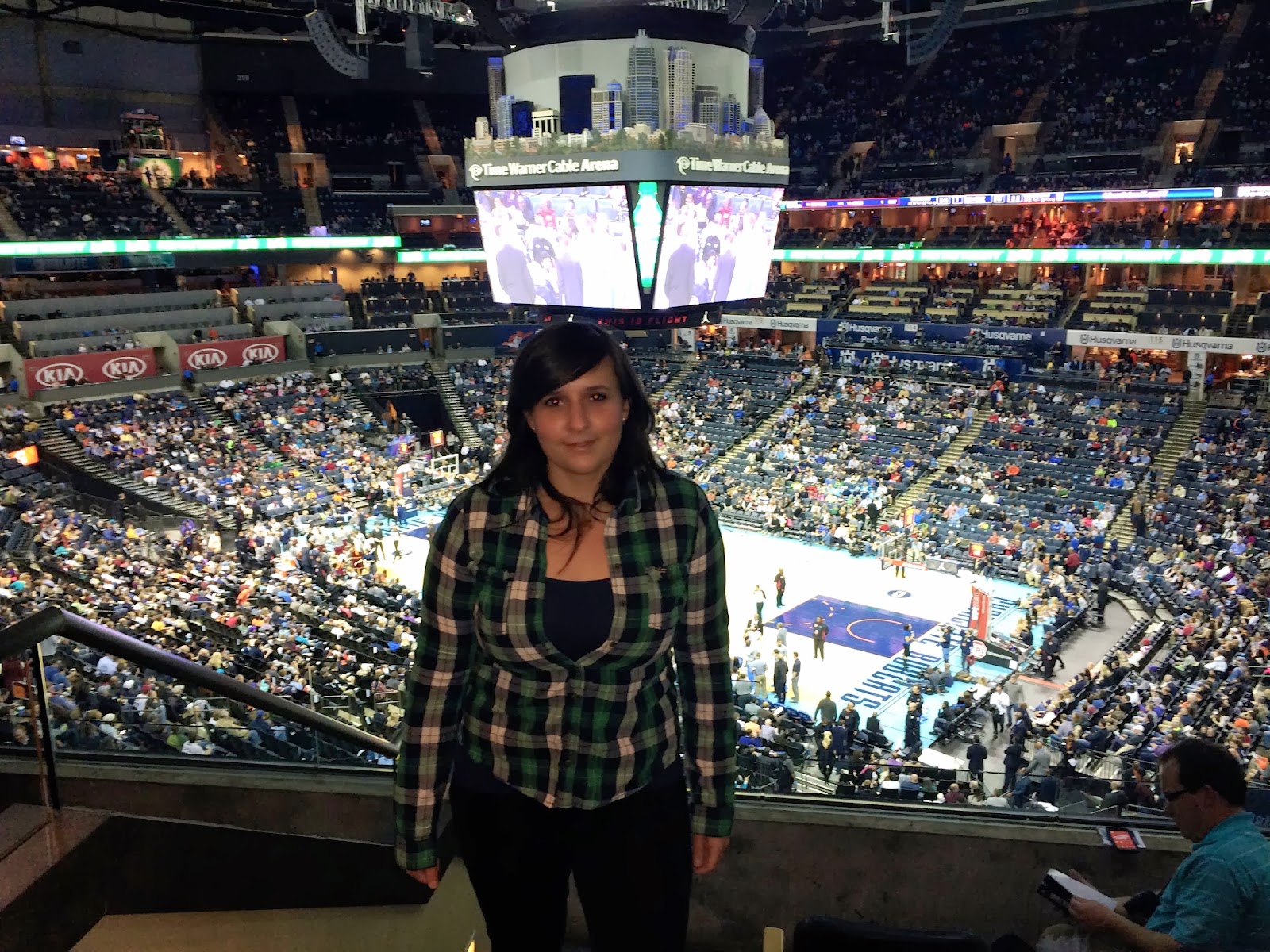
To say that the journey of the Charlotte Bobcats over the past few years has been rough, would be putting it lightly.  Despite sizable notoriety at the helm of the organization with owner Michael Jordan hard at work, the Bobcats have faced a losing record season after season.  But there’s a new franchise in the making, a team finding a competitive edge with the acquisition of Al Jefferson alongside a young core of talented players, and a new look that will see the Bobcats donning an old familiar name when they return as the Charlotte Hornets next year.  An Emory University study highlighted Charlotte’s basketball fans as some of the most social media savvy, holding steady at 4th in the league for most engaged fans only after the NBA’s heaviest hitters (Lakers, Heat, Celtics). Recently news broke about the team’s partnership with 10 Foot Wave, incorporating the company’s FanConnect platform within Time Warner Cable Arena. The technology combines sponsor messaging with live game content, real-time stats, NBA scores and social media delivered to screens throughout the venue.  I sat down with Jerome Hubbard, Communications Coordinator for the Charlotte Bobcats, this week to discuss the new platforms, the exciting re-branding, and the unwavering fan support as the team begins its journey to capturing a new generation of fans.

On the Challenges of the Digital Information Age…"When I first got here our record was 7-59. There’s not much good that’s going to come out of 7-59, it is what it is.  If you’re the Miami Heat and you’re winning games and you’re blowing people out of the water, and you have the best player in the game you don’t really have to worry about information because at the end of the day it’s pretty much everyday the Miami Heat win and why they win.  When you’re dealing with losing, and you’re dealing with people who are tired of losing, who work their tail off and are not seeing the results, then they say that we’re not showing effort, we’re not showing energy, we’re not showing the patience and the due diligence and the hard work, and that’s not right.  So that’s more of a situation that you have to really monitor and that goes to the personal relationships. In the past and even now the personal relationships that you gain with the reporters and the people who are covering the team, whether it’s on the TV side, the radio side, or the print side, those relationships allow you to give them information knowing that they’ll use it fairly and that ultimately they’ll use it in the right way.  If you don’t have those personal skills or that personal relationship then it’s really hard and that to me really makes or breaks a person in this field."


instagram.com/brooklyn_hun
On Resurrecting & Rebranding the Hornets…"There’s certain things about the Hornets that Charlotte loves. Charlotte loves the colors, Charlotte loves the name, Charlotte even loves the mascot.  But you also have to keep in mind at the end of the day that it HAS to be different. We can’t go back to everything that was the Hornets, but we do want to continue to grow and galvanize not only our Bobcats fans, but those Hornets historians who love the Hornets, love the tradition, love everything about the experience when they first came.  You have all of these different moving parts, the official name change, the logo, the mascot, the cheerleaders, the unveiling of our uniforms, all of those different things are strategic and I think we’ve made a concentrated effort to continue to make sure that we maximize every opportunity with each phase that we’re going through.  Everything that we do we want to be an experience.  Unveiling our logo was an event where we had our owner Michael Jordan halftime, really bringing out the logo with former Hornets players with a bunch of fans there screaming, and it was well received, in the same way that it was well received when we applied and were approved for the name change. Hats off to not only the organization, but also the fans that continue to support us.  There’s so much going on and we want to maximize it, whether it’s thru digital, thru a fan experience, or whether it’s just the continued process from start to finish. "

instagram.com/brooklyn_hun
On New Technology in the Arena…"If you look at the NFL, their sales in relation to attendance has decreased over the past couple years and that’s because a lot of people feel as though it’s much more convenient to be in front of the TV where I can watch NFL RedZone and have five different games on at one time and I can monitor not only the one I want to watch, but also what’s going on here, what’s going on there, and how this or that game affects my fantasy league or team.  That truly appeals to fans not only in the NFL, but also in MLB, and also the NBA, so if we can continue to add various elements to our inner arena experience, that may be something that somebody else doesn’t have.  And that may get that one or two or 100 or 200 more individuals attending our games. So you want to continue reinventing the wheel and keep adding elements and hopefully you get to a point where you have the best inner arena experience in the NBA, and even more so than that, just sports in general.  Adding something like the FanConnect or the Technocom business center in our arena, or adding luxury suites and a luxury experience for our suite owners, all of these different things come into play and that’s just added value to our inner arena experience for those that decide to come to our games."

instagram.com/brooklyn_hun
On Developing the Fan Experience…The fans are fans, if a team is losing or winning they’re still going to come out and support. Like the Knicks, they have a loyal fan base, they sell out every game no matter what. Win lose or draw they’re selling out every game and that is a credit to the fans.  We want to make the fan experience great in Charlotte and we’ve done so many things to continue to make sure that the organization and the fan experience at our basketball games and anytime they come to our arena is up to par.  Whether it’s the interaction with the players that they possibly can have pregame, the concession stand, the dance team, the mascot, whether it’s us going out into the community and having giveaways, or even having trivia contests through social media, there’s so many different things that we have done in order to continue to keep our fans engaged, to continue to keep the environment of the games great.  So even if we win or lose, we want people to be able to say, I enjoyed myself at the basketball game, it really was a great experience.  That one-on-one experience that you can get coming to a Bobcats game is something that you really want to hang your hat on.

Thursday, February 27, 2014

College Athletes in the Digital Sports Age with Duke University Baseball Pitcher Remy Janco


Sports controversy has brewed this off-season around the Phillies decision to turn in two college baseball players for using an agent during negotiations with the team (first reported on Twitter by Baseball America’s Aaron Fitt).  The sought after advice likely led the players to return to college rather than signing with the team, resulting in a frustrated Phillies’s organization.  According to CBS Sports using an agent is common practice in dealing with MLB teams, however the Phillies’s report resulted in an indefinite NCAA suspension for Oregon State pitcher Ben Wetzler, that could be extremely damaging to his future.  With so much discussion surrounding policy vs. player development I was curious to know whether we are doing enough to protect and help our young athletes.  The digital landscape has paved the way to unlimited resources for an educated athlete to learn every aspect of his sport and seek out advice, but are young athletes prepared enough in their daily lives?  Can they effectively manage their future careers, wading thru the waters of personal branding, online reputation, skills improvement, and career decision-making, all while still maturing into adults?  Or are we setting them up for failure by relying on the Internet as their sole source of advice?  To help provide some insight into this I interviewed Duke University baseball pitcher Remy Janco.


Q.) With so many tools, videos, advice, and research available online, do you feel that high school college players are prepared enough to make serious life decisions like college vs. pros unaccompanied, or do they still rely heavily on the expertise of others in the business?
A.) "I think that as a college baseball player in today's age I have many more opportunities than those in my shoes in the past.  During my recruiting process, I used video to spread my name and create another avenue to reach college coaches other than just seeing them at showcases and tournaments. Video was and still is a large part of my development as a player. One particular video analysis tool I use is the RightViewPro application that is used by many college baseball programs to break down a player’s mechanics and work on making positive changes.  With these new tools, videos, and advice I am not only able to develop more as a player, but I was also able to make a very educated decision on where it was I wanted to go to college. From my perspective, I think that all the new tools are extremely helpful in the process, but it is still very valuable to have an agent or an individual by your side who has dealt with the process before and has your best interests in mind.  This is something a tool simply cannot provide no matter how effective it is."

Q.) How do you balance sharing your personal college life on social media sites with protecting your image as a collegiate ball player?  Does the University provide you with any education about online reputation management?
A.) "As a college athlete I am very active on social media. I have a Twitter and a Facebook account where I communicate my everyday life to my friends, family, and other followers. I really enjoy being active on social media, but it also is very important that I am smart about what I post. The athletic department at my school along with the baseball program follow me on Twitter to make sure that I am being responsible online, as well as doing a good job in representing myself and the university. The athletic department also has a very useful program that freshman athletes must take that educates them on social media and how to use it to promote their image responsibly. It’s aimed at making the transition into college easier and encourages us all to learn what it means to be a student athlete and a positive representative of our school."

Q.) Just for fun there’s a White House petition being led this week by Ozzie Smith to make baseball's opening day a national holiday.  Does he have your support?
A.) "I think that the petition led by Ozzie Smith is extremely interesting! While I would love to see opening day recognized as a national holiday, I think it will be a very difficult task. As America's national pastime, I think Ozzie has an argument for his petition, a national holiday is a very big deal and to have that passed would open the door for a lot of other sports to make the same argument. I'm very curious to see where that goes, but I’m definitely behind it!"

Friday, February 21, 2014

Online Reputation in the Digital Sports Age with CBSSports.com Columnist Gregg Doyel


            Earlier this week I brought you a glimpse into the timeline of events that lead to NFL player Richie Incognito’s fall from grace including digital imprints in voicemails and texts, as well as excessive tweeting, that added fuel to the story and left a lasting public opinion of the player as the worst kind of bully.  My guest interviewee, national columnist Gregg Doyel, writes for CBSSports.com and shines a light on the struggles with reputation in the information age.   This week he wrote a piece on Incognito and his battle with seeing the worse of himself in the public spotlight and whether he could learn something from all his mistakes (http://cbsprt.co/1c7PudP).  I was curious to get Doyel’s take on this, especially regarding our own unique relationship.

Doyel on CNN 2009
Before this week I’d have been more likely to call Doyel an enemy than a friend.  In 2009, at the height of my tabloid explosion, CNN covered dangers in the workplace and whether the sports world plays by a different set of standards, with Doyel as their expert guest.  Instead of using his time on air to talk about workplace dynamics, Doyel spent most of it degrading my appearance and sounding off on the fact I was only news because I was so unattractive.  And just like much of my struggle in regaining control of my online reputation (lawsuits, press circuits, websites), the video of Doyel remains heavily YouTubed to my name.  This week Doyel made a conscious decision to right his wrong, using social media to reach out to me and apologize for his behavior and embarrassment at the man he once was.  I wanted to get inside his head both in his professional setting detailing Incognito's story and in his personal life looking back at his public mishaps.  I wondered what brings about this negative behavior, is there something to learn when we’re faced with the worst of ourselves, and is there a way to leave behind a positive image in this crazy digital jungle?

Source: http://bit.ly/1nsPIXw

Q.) What do you think propels those in the sports world to take a more abrasive, "bullying" tone in dealing with one another?
A.) "I think it's personal weakness. We all want to be perceived by our peers -- strangers, sadly -- as being cool or snarky or smart or whatever, and so we tee off when we can. Sometimes it translates to bullying, sometimes to cruelty or insensitivity. I suppose in some cases, sure, it's a person acting out based on how they've been treated, and now it's THEIR chance to treat someone badly. But in more cases, I'd bet it is just people showing how weak and pathetic they (we) are by wanting to be perceived as cool by a flock of strangers who don't care about us in the first place. Talk about pointless."
Q.) How do you think the digital age has changed how we view sports professionals?  Has it hurt more than helped?  Has it changed how you report?
A.) "Social media can show us the beauty in the world by allowing us to share and spread links about wonderful stories, but it also has made everything uglier because it has allowed us to see the real people we cover and watch, and also it has allowed us to show the real US who are covering and/or watching sports. Every person is flawed and imperfect, and social media doesn't just take off our makeup and toupee, it aims a magnifying glass on our blemishes. The irony is, we're the ones aiming the magnifying glass at ourselves by trumpeting just how flawed we are as people. "
Social media has, finally, made me become a nicer reporter/writer. I'm no longer chasing the snark crowd. If I have a snarky thought and the readers like it, great. But also, I know they're going to like prettier, more uplifting stories, and those are the ones I make it a point to pursue. If too much time passes since I've written one of those, I make it a point to write another one. Social media has helped me see the necessity of that. People crave good news. And I crave it myself.

Source: http://bit.ly/1hmPbic
Q.) Looking at the long term effects of the digital imprint of ourselves that's available 24/7, how do you think Incognito's story will play out?
A.) Incognito isn't smart enough or nice enough to win on social media, so he needs to get off Twitter. Some people don't have the tools to win people over, and unless he changes who he is, he doesn't have those tools. He's bound to screw himself up by saying the wrong thing; meaning, showing us exactly who he is. And who he is, up to now, is a dislikable jerk (at best). My advice to him would be to stop being mean and try to be nice. Easier said than done, and you have to have that wiring within to embrace kindness. Not sure he does.
Q.) Do you think there can be successes in sports with social media?  Is there a way to balance connecting with fans and showing a fun loving side, but not destroying one’s professional reputation?
A.) There are some athletes who I'm pretty sure aren't the nicest people ever, but because they're so good on social media, they win anyway. Brandon Phillips of the Reds is one. Chad Johnson (was) another. Some people are just so good at social media, even if they're not terribly good at winning people over on the field or in the clubhouse that it works for them. But those are the outliers, the exceptions. They do exist! But it's really hard to appear nicer on social media than you do away from it. Those two have done it, and kudos to them. They've shown me another side of them, and made me reconsider them as people because they are so charismatic and kind on social media.